Of all industries affected by the recent COVID-19 crisis, none have been more critical than the healthcare industry.
Like soldiers at war, medical staff have been and continue to be our warriors on the frontline as the world battles the worst pandemic since the Spanish Flu hit in 1918.
As a leading platform for managing a mobile workforce, a large portion of our clients at Skedulo are in the healthcare sector. We work closely with not-for-profit, medical and allied health organizations to make complex scheduling easy, and facilitate improved transparency of resource utilization, costs, productivity and patient care.
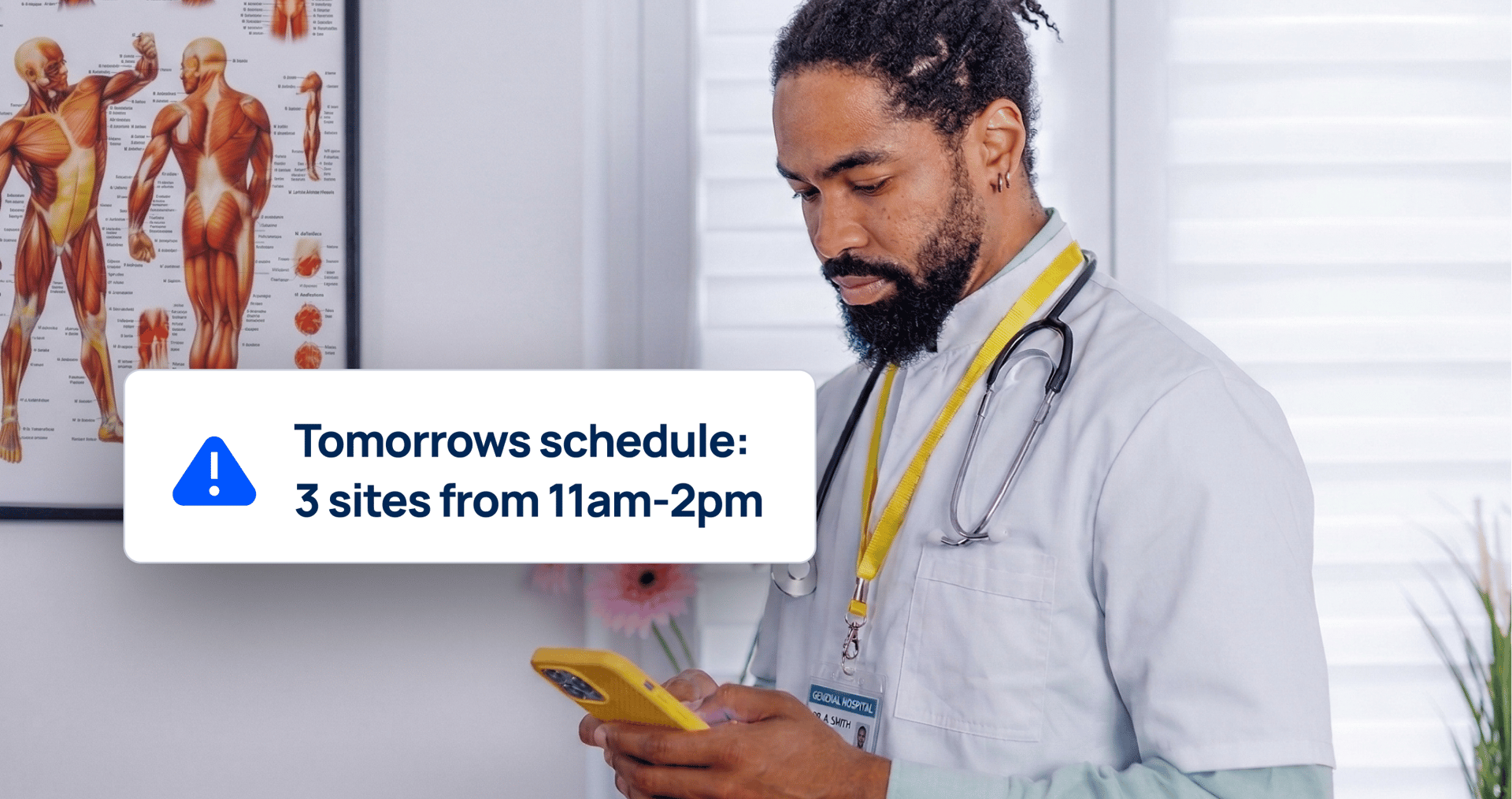
In recent months, we’ve seen a definite increase in appointment scheduling. With many providers offering their services via telehealth and most patients under stay-at-home orders, scheduling health appointments is more convenient than ever before.
While there are plenty of appointments being cancelled for non-essential services, inquiries into coronavirus symptoms and testing are taking their place.
As well as regularly scheduled appointments (such as those required to manage chronic conditions), individuals are facing heightened anxiety and are more likely to make appointments to investigate health concerns. This increase is primarily occurring in dense, urban populations where the spread of coronavirus is a very real possibility. Rural providers don’t appear to be facing the same capacity or scheduling challenges, but they do need support to triage their services.
Currently, home health care providers are also more likely to provide complementary services to address general health and wellbeing. For example, there has been genuine public concern about limited access to essential resources such as food, education, childcare, and so on.
The stress this has caused can lead to chronic medical conditions, which is a great concern for providers. So as the public increasingly reach out to their trusted healthcare professionals for help, we’re seeing more providers deliver resources that would typically be out of scope - such as social or mental health care workers.
Technology is enabling service continuity
We partnered with our client, Solace Pediatric Home Healthcare, to introduce telemedicine into their operations in mid-March.
As a result, they were able to:
- Complete 85% of the “normal” level of appointments in week 1
- Complete 100% of the “normal” level of appointments in week 2
- Set a new record for the number of appointments completed in week 3
Baby boomers and older generations are a demographic that have been hesitant to adopt telehealth services. However, even they are adopting them out of necessity to maintain their level of care.
In fact, a large global telehealth provider shared that the average age of a person they send tablets and remote patient monitoring devices to is 77. Surprisingly, over 90% of this population can get their technology up and running without the help of tech support.
So while the healthcare industry has been previously resistant to new technology and interoperability, the recent situation has propelled it forward by decades.
From biometric devices to IOT sensors, healthcare workers can easily track health data to gain a better understanding of a patient’s health and environment, making virtual visits even more effective and efficient for stakeholders.
Get more like this in your inbox.
New posts on scheduling, field work, and what we're shipping next. Sent when we publish. Nothing else.

Real operational insight
What's changing in the industry
New features as we ship them
What the healthcare market may look like post COVID-19
It’s highly likely that telehealth services are here to stay, and will continue to enhance the way organizations deliver their care.
Remote patient monitoring via biometric devices (such as blood pressure, pulse oximeter, weight and thermometer) will also continue to grow and enhance the effectiveness of care delivery.
Other potential future changes to healthcare include:
- Increased collaboration and interoperability
- Potential for payment disruption due to the volume of submissions and error
- Increased focus on vaccine tracking and delivery
- Better coverage for determinants of health (environment, education, etc.)
- An awareness around the need to treat underlying causes of chronic conditions
- Data rich decision-making based on real time monitoring
- Advanced analytics, machine learning and AI
It’s possible we will also see healthcare reform in the US. COVID-19 has shown just how disparate and divided the US healthcare system is. So the opportunity to redefine it is top of mind for many in the industry.
This may be the greatest shake up we have ever seen in the healthcare industry in such a short time period. And we are definitely proud to be on the leading edge with our clients as they reposition themselves to meet the demands of a post-COVID world.